


For any foreign national currently in the United States on a nonimmigrant visa, the goal of “permanent residency” becomes a reality through a process called Adjustment of Status. The vehicle for this transformation is Form I-485, Application to Register Permanent Residence or Adjust Status. Unlike consular processing, which requires you to leave the U.S. for an interview abroad, the I-485 allows you to stay in the country, continue working, and maintain your life while USCIS finalizes your Green Card.
The I-485 Form is more than just a request for a plastic card; it is a comprehensive legal background check. By filing this form, you are asking U.S. Citizenship and Immigration Services (USCIS) to verify that you have maintained lawful status, possess a valid underlying immigrant petition, and are not “inadmissible” due to health, criminal, or security reasons.
The Benefits of a Pending I-485: More Than Just a Wait
One of the most powerful aspects of filing the I-485 is the suite of “interim benefits” it unlocks. While the government adjudicates your application—a process that can take months or even years—you are granted specific legal protections:
● Legal Stay: Once your I-485 is properly filed, you are in a “period of authorized stay.” This means even if your original visa (like an H-1B or O-1) expires while the application is pending, you can remain in the U.S. legally. The USCIS Policy Manual goes into additional detail.
● Work Authorization (EAD): You can simultaneously file Form I-765 to receive an Employment Authorization Document, allowing you to work for any employer in the U.S.
● Travel Permission (Advance Parole): By filing Form I-131, you can obtain a travel document that allows you to leave and re-enter the U.S. without abandoning your Green Card application.
Critical 2026 Requirement: The “Concurrent” Medical Exam
A major shift in USCIS policy now dictates how you must handle your medical evidence. Historically, applicants often waited for a Request for Evidence (RFE) to submit their medical results. As of 2026, USCIS strictly requires that Form I-693, Report of Immigration Medical Examination and Vaccination Record, be submitted at the same time you file your Form I-485.
Failure to include a sealed, valid medical exam from a designated civil surgeon can result in the immediate rejection of your entire filing package. This “upfront” medical requirement is designed to speed up final adjudication, but it places the burden of preparation squarely on the applicant before the initial mailing.
The Documentary Foundation: What You Must Include
The I-485 is an evidence-heavy filing. To ensure you haven’t missed a critical component, you should cross-reference your packet with the official USCIS checklist of required initial evidence before mailing. Standard required evidence includes:
- Proof of Identity: A copy of your birth certificate and a government-issued photo ID.
- Inspection and Admission: Evidence that you entered the U.S. legally, typically your most recent Form I-94 arrival/departure record.
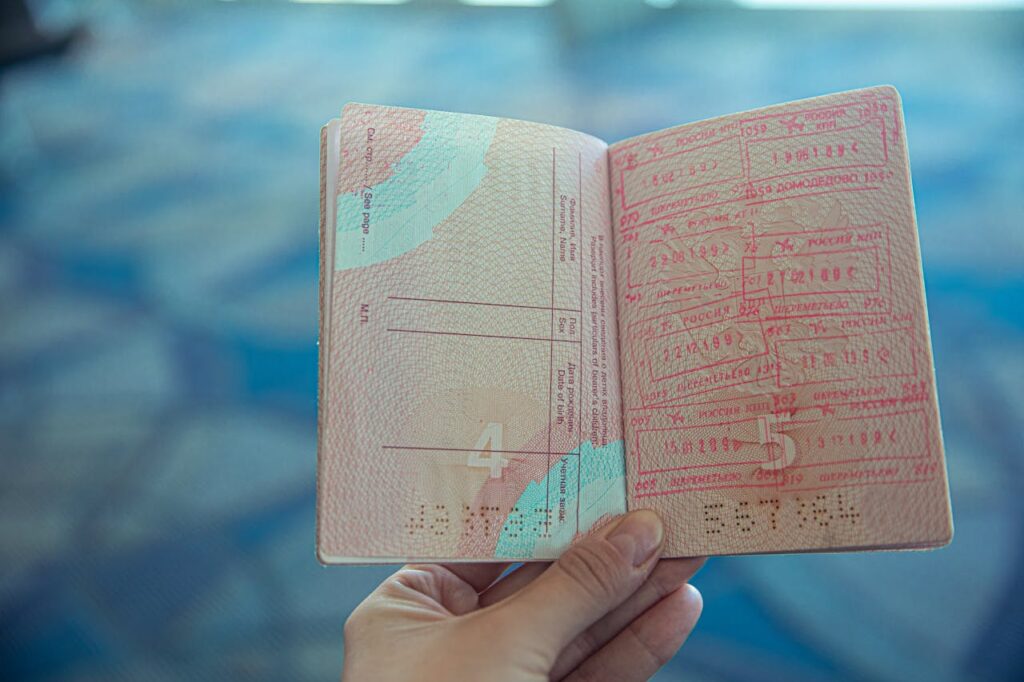
- Maintenance of Status: Copies of every visa approval notice (I-797) and passport stamp you have received since your first entry to the U.S.
- The Underlying Petition: Proof of your eligibility, such as an approval notice for an I-140 (employment) or I-130 (family) petition. In some cases, these can be filed “concurrently” with the I-485.
Navigating Inadmissibility: The “Clear-Eyed” Review
The I-485 contains a long series of “Yes/No” questions regarding your history. These cover everything from minor traffic violations to memberships in specific organizations. Answering these accurately is paramount; any perceived “misrepresentation” on the I-485 can lead to a permanent bar from the United States.
Before filing, it is essential to conduct a “clear-eyed” review of your history. If you have ever worked without authorization, stayed past your visa expiration, or had a run-in with law enforcement, you may need to file a waiver of inadmissibility alongside your application.
Final Steps: Biometrics and Adjudication
After filing, you will be scheduled for a biometrics appointment where your fingerprints and photo are taken for background checks. From there, the case enters the adjudication queue. While some applicants may be called for an in-person interview at a local Field Office, USCIS has been increasingly waiving interviews for employment-based and certain family-based cases that are well-documented from the start.
The I-485 is the bridge to your American future. By ensuring your medicals are current, your documentation is complete, and your history is fully disclosed, you move from the uncertainty of a temporary visa to the security of permanent residency.

