


Cities That Were Built to Slow You Down
Some cities were designed for expansion. Others were designed for control. Beijing and Seoul belong to the latter category, though that control no longer announces itself clearly. It lingers instead, felt more than seen, embedded in how space tightens and loosens as you move through it. Streets widen, then narrow again. Sound behaves differently near walls that were never meant to be decorative. You begin to sense that movement here has always been something to be managed carefully — not rushed, not left to chance. Even now, with traffic and glass towers pressing close, the older logic still holds quietly in the background.
Arriving Without a Sense of Arrival
Beijing doesn’t present itself suddenly. It gathers. Density increases almost without notice, the city assembling itself around you while you’re still adjusting to motion. Travelling on the train from Shanghai to Beijing, the transition feels gradual rather than directional. Fields flatten out. Industrial edges appear, then thin again. Villages pass too quickly to register fully. Speed exists, but it doesn’t dominate the experience. By the time the city asserts its presence, movement has already slowed internally, as though preparing you for a place that was never meant to be entered casually.
Space That Regulates Rather Than Impresses
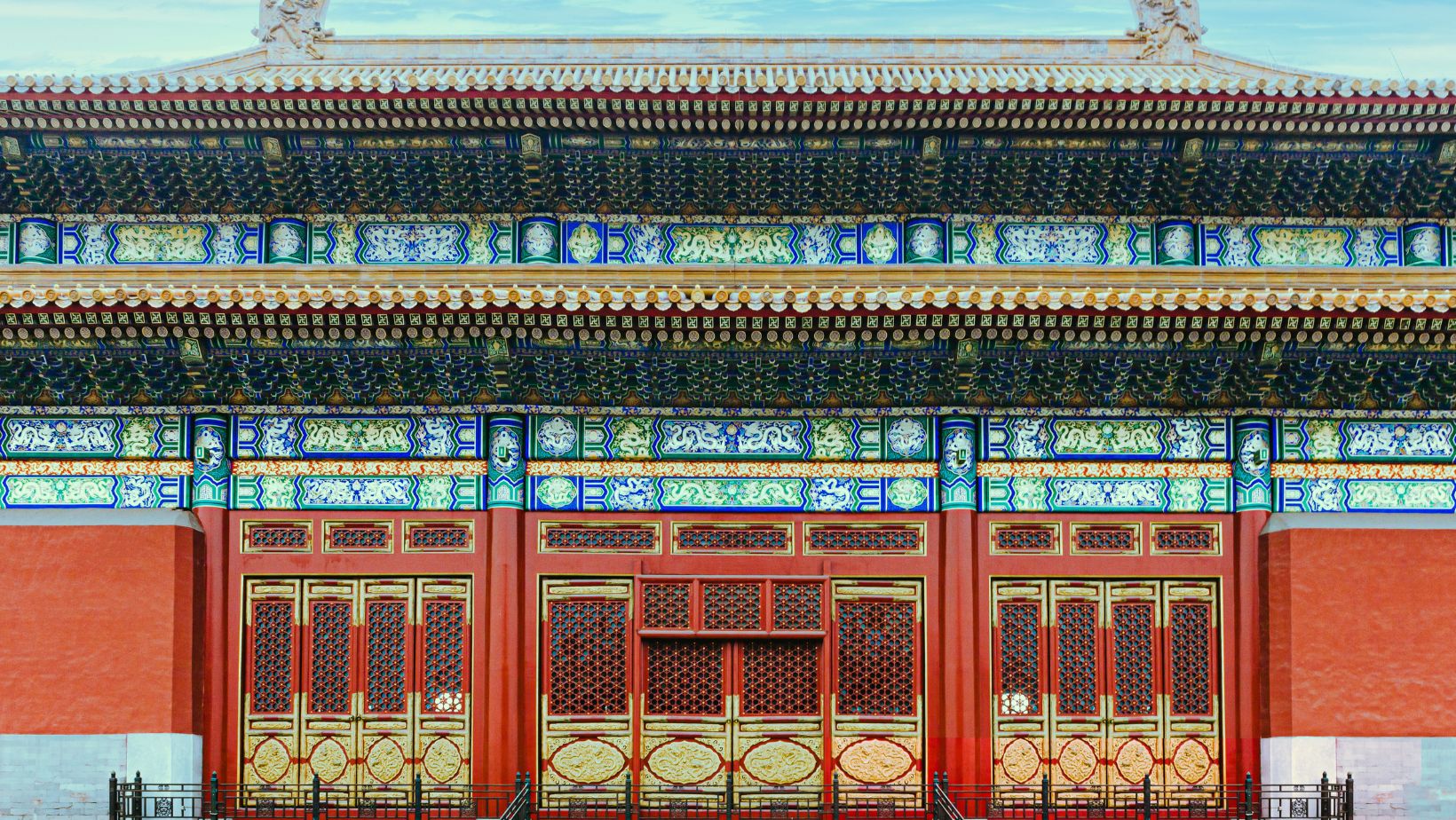
Inside the Forbidden City, scale stops behaving the way you expect it to. Courtyards stretch, but not for spectacle. Gates repeat themselves with slight variation, enough to orient without inviting choice. You don’t wander here. You proceed. The architecture doesn’t ask to be admired so much as obeyed. Over time, repetition takes over. Rooflines echo one another. Stone extends without interruption. The effect isn’t dramatic. It’s steady. Power here was never theatrical. It was consistent, reinforced through movement that was measured, predictable, and difficult to avoid.
Modern Movement That Mirrors Older Patterns
Travel across South Korea reflects this same adaptability. The Seoul to Busan train ticket route moves efficiently, but without drama. Cities loosen into countryside, then reassemble again elsewhere. The rhythm feels rehearsed, dependable, absorbed into everyday life. You’re not removed from where you started. You’re shifted. Distance compresses without erasing geography. Movement supports continuity rather than declaring change.
When Order Becomes Familiar
After a while, the structure stops feeling imposing. It begins to feel normal. You adjust your pace without thinking. You stop questioning direction. The boundaries become reference points rather than restrictions. The experience doesn’t offer narrative clarity. It offers alignment. You leave not with information, but with the sensation of having moved through a system that once depended on spatial discipline to maintain itself. The logic remains legible even when the authority behind it has faded.
A Palace That Lives Inside the City
Seoul handles its dynastic core differently, but the adjustment feels subtle rather than oppositional. Gyeongbokgung doesn’t sit apart from the city. It’s surrounded by it, pressed close by roads, offices, daily movement. Mountains hold the background steady. Entering the palace grounds doesn’t feel like stepping back in time. It feels like stepping sideways. Noise softens. Space opens. Buildings sit lower, wider, more responsive to light and weather. The city remains present at the edges, never fully excluded.
Architecture That Accepts Interruption
Gyeongbokgung feels less concerned with hierarchy and more with balance. Courtyards allow movement to disperse. Sightlines lead outward rather than inward. The buildings feel adjusted over time rather than fixed, rebuilt and restored without insisting on purity. Power here seems less about containment and more about placement — how structures relate to one another, how they sit within the land rather than above it. The palace doesn’t resist the present. It absorbs it.
What Doesn’t Separate Cleanly
Later, Beijing and Seoul don’t return as distinct experiences. They overlap. Gates recall gates. Courtyards echo other courtyards. The feeling of being guided without instruction repeats itself. The dynasties themselves remain abstract, but their spatial instincts persist — in how cities manage flow, how movement is shaped without being announced. Nothing resolves into a conclusion. The experience stays slightly unfinished, a residue of controlled motion and softened authority that continues to surface long after the physical journey ends.
An Impression That Refuses Order
What remains doesn’t organise itself into memory the way a story would. It arrives unevenly — the sense of being guided without being told where to go, the way space adjusted your pace without instruction, the quiet acceptance of boundaries you didn’t question at the time. These impressions don’t settle into understanding. They linger as a background awareness, resurfacing without sequence, altering how movement feels elsewhere, long after the gates themselves have faded from view.

