


Bangkok’s property market has never stood still for long, but the shift currently underway in the luxury segment is more fundamental than a design trend or a pricing cycle. The way high-end buyers think about where they want to live has changed, and mixed-use development is the format that has emerged to meet that change head-on.
The premise is straightforward. Rather than building homes in one place and expecting residents to travel elsewhere for everything else, mixed-use developments bring the elsewhere inside the gates. Retail, recreation, workspace, wellness, and hospitality sit alongside residential clusters within a single master-planned environment. For buyers who have spent years navigating Bangkok’s traffic to access the things that make daily life function, the appeal is immediate and practical.
What Mixed-Use Actually Means at the Luxury Level
The term mixed-use gets applied loosely across the property industry, sometimes to describe nothing more than a condo tower with a coffee shop on the ground floor. At the luxury end of the Bangkok market, the standard is considerably higher.
A genuine mixed-use development Bangkok buyers are considering at this price point typically includes several distinct components operating at a meaningful scale. Residential product sits alongside recreational infrastructure such as golf courses, sports facilities, and wellness centres. Commercial elements might include co-working space, retail convenience, and, in some cases, hotel or serviced apartment components. Connectivity between all of these, both physical and programmatic, is what separates a true mixed-use community from a development that simply has multiple building types on a large site.
The quality of integration matters as much as the presence of each component. A golf course that requires driving to reach from the residential cluster, or a gym that closes at 8 pm, or a retail offering so limited it requires residents to leave for basic groceries, these are failures of integration, not just inconveniences. Buyers evaluating luxury mixed-use communities in Bangkok have become sharper at identifying these gaps during site visits.
The Forces Driving the Mixed-Use Shift
Several trends have converged to make mixed-use development the dominant aspiration in Bangkok’s luxury residential market.
Traffic remains the most cited factor, and it is not going away. Bangkok consistently ranks among the most congested cities in Asia, and the commuting reality for families who need to access schools, workplaces, hospitals, and leisure facilities across different parts of the city is genuinely exhausting. A development that absorbs several of those trips into a walkable or short-drive environment within the same gates represents a meaningful quality-of-life improvement.
The normalisation of remote and hybrid work has reinforced this. When the office is no longer a daily destination, the calculus of where to live shifts. Being close to a CBD matters less. Being in an environment that supports a full daily life matters more. Co-working space within a residential community went from being a novelty to a near-requirement for buyers in professional households over the course of just a few years.
Wellness has also become a genuine purchase driver rather than a marketing footnote. Buyers are asking specific questions about facilities: Is the gym actually equipped, or is it three treadmills in a converted utility room? Is there a spa or an onsen, and is it managed to hotel standards? Is there meaningful green space for walking and cycling, or is it ornamental landscaping around a car park? The developments that can answer these questions substantively are the ones converting serious enquiries into sales.
How Bangkok’s Luxury Mixed-Use Developments Compare
The Bangkok market currently has a handful of large-scale luxury communities that genuinely qualify as mixed-use in a meaningful sense, and they differ in ways worth understanding.
Some developments have prioritised residential scale above all else, building large numbers of units within a branded environment but with amenities that feel undersized relative to the population they serve. The clubhouse is beautiful but busy. The pool is crowded on weekends. The green space is manicured but shallow. These are communities that marketed a lifestyle but underinvested in the infrastructure to sustain it.
Others have made the opposite trade-off, investing heavily in amenity and programming but at a scale so exclusive that the community never quite reaches the density needed to feel alive. A 10-kilometre walking trail is wonderful, but it is more enjoyable when there are neighbours to encounter along the way.
The strongest performers in this comparison are developments that have managed scale and quality simultaneously, large enough to support meaningful amenity investment and a genuine sense of community, but curated enough to maintain standards across the residential, commercial, and recreational components. These communities tend to have longer development timelines and larger land holdings, because you cannot retrofit a golf course or a wellness centre into a site that was not planned for it from the beginning.
Location within the Bangkok metro area also differentiates these communities. The western and northern suburban corridors have attracted the largest master-planned sites, partly because land availability allows the scale that genuine mixed-use development requires. Buyers willing to position themselves in these corridors gain access to the most complete communities; those anchored to specific eastern or central corridors have a narrower set of options.
Reignwood Park: Where the Mixed-Use Model Comes Together
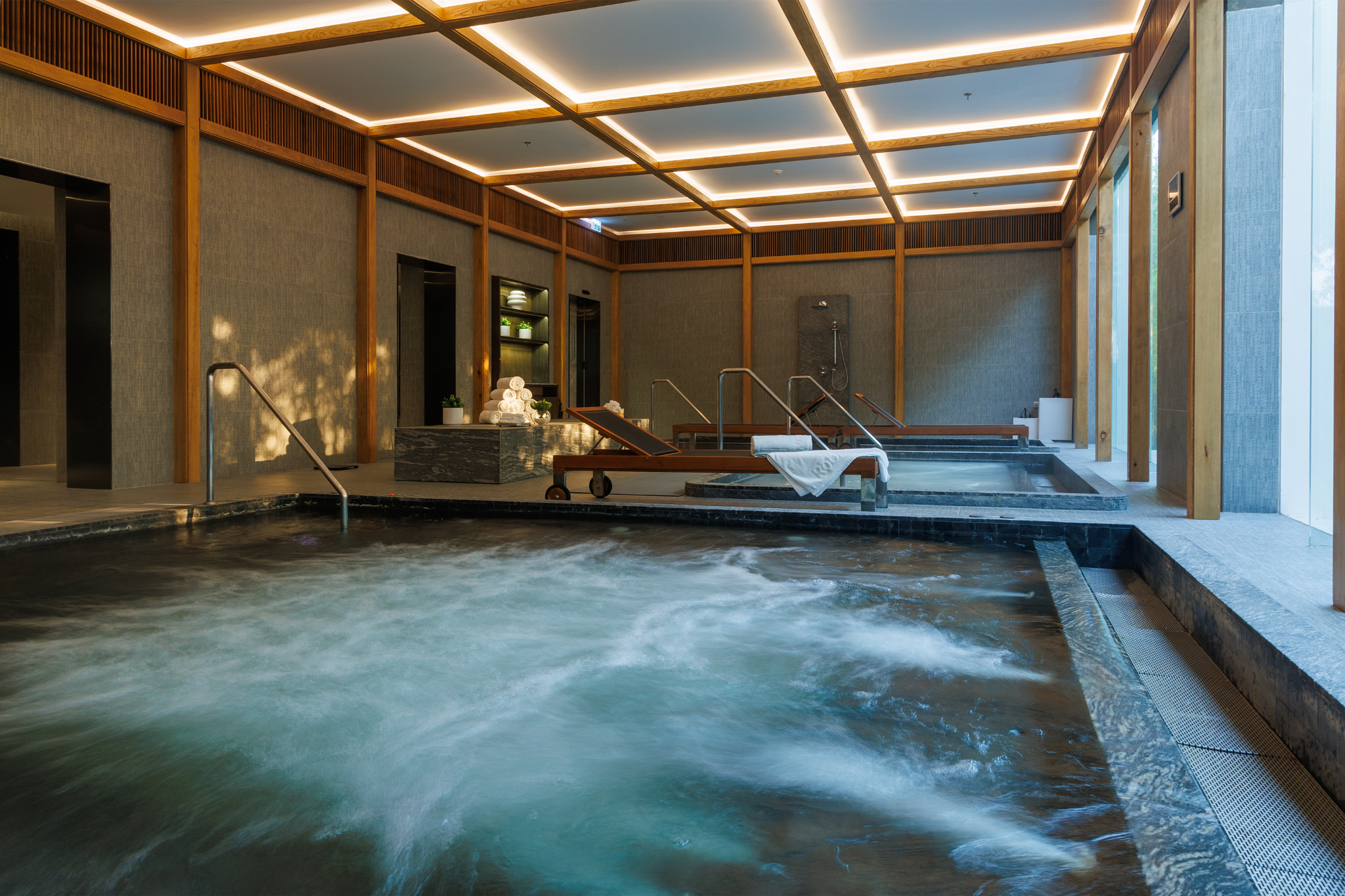
For buyers running this comparison seriously, Reignwood Park warrants a close look as one of the more fully realised examples of the mixed-use luxury model currently available near Bangkok.
The development operates across a substantial land area with multiple residential collections, each serving a different household profile and price point within the same master plan. This tiered residential structure is itself a marker of genuine mixed-use thinking: a community where a young couple in a SONIA home and a multi-generational family in an ESTATE mansion share the same golf course, the same onsen, the same 10-kilometre walking and cycling track, and the same co-working space at the clubhouse.
The recreational infrastructure is notably broad. The Par 3 golf course sits alongside the onsen and gym as leisure anchors, with the long walking and cycling loop providing daily-use green infrastructure that goes well beyond ornamental landscaping. The smart home and underground cable systems across the development reflect an investment in the residential product itself, not just the shared spaces.
What sets Reignwood Park apart in a direct comparison with other luxury communities near Bangkok is the global dimension of its membership offering. Private access to Wentworth Golf Club in London and Reignwood Pine Valley in Beijing, combined with a chauffeur-driven Rolls Royce experience, positions the community as something closer to a private club with a residential component than a housing project with a nice gym. For buyers who travel internationally and value continuity of lifestyle across different cities, this is a substantive differentiator rather than a decorative one.
The choice between Reignwood Park and other luxury developments near Bangkok ultimately comes down to what a buyer values most in this trade-off. But for those whose priority is the most complete mixed-use environment, it makes a strong case.
The Commercial and Retail Gap
One honest limitation worth acknowledging in Bangkok’s current luxury mixed-use landscape is retail. Very few residential-led mixed-use communities have managed to integrate retail at a scale that genuinely serves residents’ daily needs. The developments that have come closest tend to be those with hotel or serviced apartment components that justify a retail offering on commercial grounds independently of the residential population.
This is partly a density problem. A gated community of 100 to 400 homes does not generate the foot traffic to sustain a full-service supermarket or a restaurant row. Developers who have tried to force retail into residential communities at insufficient scale have generally found it does not hold.
The more common solution is proximity rather than integration, positioning the community within a short drive of established retail nodes rather than attempting to replicate them on-site. This works reasonably well in practice, but it does mean that the “everything within the gates” proposition has a practical ceiling for most developments in the current market.
What the Next Phase Looks Like
The mixed-use model in Bangkok’s luxury segment is still maturing. The current generation of developments has largely solved the recreational and wellness component. The next competitive frontier is likely to involve educational infrastructure and healthcare access, whether through on-site clinics or structured partnerships with private hospital networks.
Developers who build these partnerships into their master plans from the beginning, rather than retrofitting them after completion, will have a genuinely stronger answer to the question of why a family should choose their community over any other. The demand is there. The question is which developments will be ready to meet it.

