


Anyone preparing for a hair transplant is likely to spend more time researching the surgical technique than the days that follow it, yet the recovery period raises just as many practical questions. One of the most common concerns is scabs after hair transplant, including how long they last, how they should be cared for, and when they might signal that healing is not progressing as expected.
Understanding what is happening underneath each scab, and why the timeline can differ from one patient to the next, makes this stage of recovery considerably less stressful to manage. Clinics such as Hair Transplant Centre Toronto typically walk patients through this stage during the pre-operative consultation, because knowing what to expect tends to reduce unnecessary worry once healing is underway.
Why Scabs After Hair Transplant Form
A hair transplant involves creating thousands of tiny wounds across the scalp, both at the donor area where grafts are removed and at the recipient area where they are placed. The body responds to this trauma the same way it responds to any small wound, by forming a protective layer over the site while new tissue develops underneath.
This process follows the same general stages as wound healing anywhere else on the body. A clot forms within minutes to stop any bleeding, an inflammatory phase follows over the next few days as the immune system clears debris from the area, and new tissue gradually forms underneath over the following weeks. This is why scabs after hair transplant typically become visible within two to four days of the procedure, once the initial clotting has hardened into a firmer crust. Patients sometimes ask when do scabs form after a hair transplant specifically, expecting an exact number, but the honest answer is a short window rather than a single day.
How Long Scabs After Hair Transplant Usually Last
Most scabs from this stage of recovery begin to loosen and shed on their own within seven to twelve days, though the exact timeline depends on graft density, individual healing rate, and how closely aftercare instructions are followed.
The recipient area, where grafts were placed, tends to shed its scabs slightly faster than the donor area, because the wounds are generally smaller. Scabbing that persists much beyond two weeks is not necessarily a cause for concern, but it is worth mentioning at a follow-up appointment so that the healing scalp can be properly assessed.
Many patients specifically wonder when scabs fall off after a hair transplant, and while the honest answer is a range rather than a fixed number, it is common to see hair transplant scabs after 7 days that have already begun softening and lifting at the edges, particularly in the recipient area. Asking how long do scabs last after a hair transplant is really asking about that same range, since the donor area and recipient area rarely finish shedding on exactly the same day.
Factors That Influence the Healing Timeline
No two patients shed scabs on exactly the same schedule, and several variables account for the difference. Graft density plays a significant role, since a densely packed session naturally involves more wound sites per square centimetre, which can extend the overall shedding window even when each individual wound heals normally. The technique used also matters: FUE procedures create many small, round wounds across the donor area, while strip harvesting concentrates the healing into a single linear incision, and each pattern sheds somewhat differently.
Age, skin type, and general health also factor in, since circulation and cell turnover naturally slow with age and with certain underlying conditions such as diabetes. Smoking is another variable worth mentioning, because nicotine constricts blood vessels and can measurably slow the delivery of oxygen and nutrients to healing tissue, which is one of the reasons most clinics recommend pausing smoking for at least a week or two before and after surgery. Finally, how closely a patient follows aftercare instructions in the first few days, particularly around washing frequency and avoiding pressure on the scalp, tends to have a noticeable effect on how evenly and predictably the scabs come away.
Caring for the Scalp While Scabs Are Present
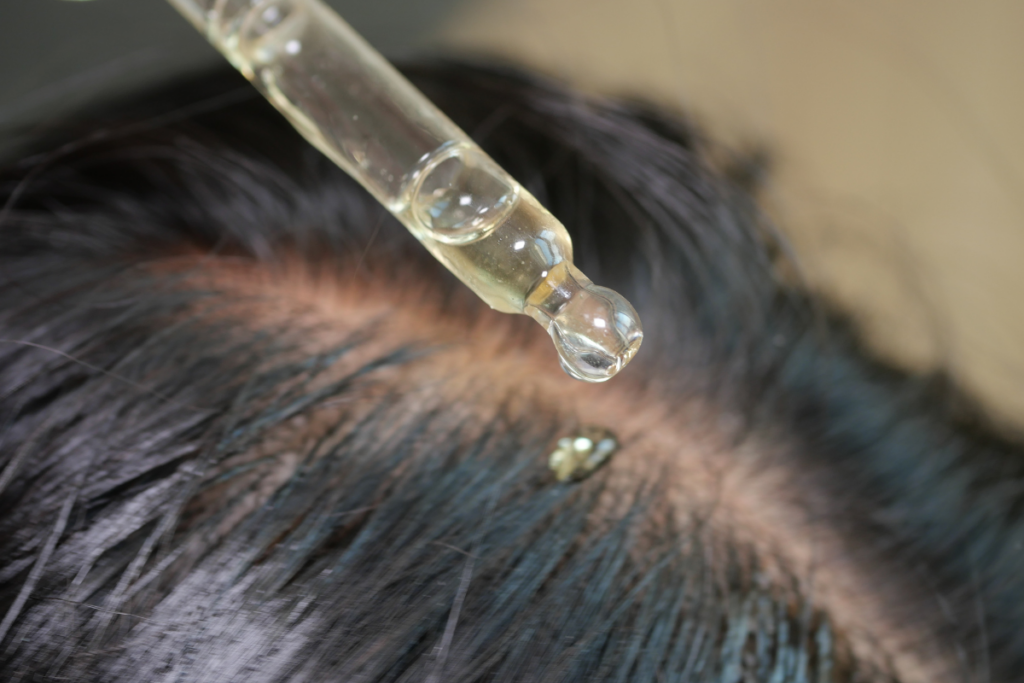
Gentle, consistent care during this period supports healthy shedding rather than trying to speed it up or remove scabs manually.
Most clinics recommend a light saline spray or a specific post-op solution applied several times a day to keep the scalp soft and to loosen crusting naturally. Washing typically begins a few days after surgery using a gentle, diluted shampoo and light fingertip pressure, never fingernails, because friction or scratching can dislodge a graft before it has properly anchored.
Patients researching how to wash scabs after a hair transplant should follow the clinic’s specific instructions rather than general online guidance, because washing frequency and pressure recommendations can vary between surgical techniques. Knowing when to wash scabs after a hair transplant matters just as much as knowing how, since starting too early can disturb grafts that have not yet anchored, while waiting too long can let crusting build up unnecessarily on the scalp.
Scabs on the scalp after a hair transplant are also more visible than scabs almost anywhere else on the body, simply because the surrounding hair is short or absent in the treated areas, which is another reason gentle handling matters more here than it might for an ordinary scrape or cut. Sun exposure should also be limited during this period, because a healing scalp is more sensitive to ultraviolet light than usual, and a scab exposed to direct sun tends to dry out and crack rather than soften and shed as intended. A hat or scarf is generally not recommended in the first days after surgery, so shade and timing of outdoor activity become the more practical tools for sun protection.
Sleeping position is another detail patients often overlook. Resting the head at a slight elevation for the first several nights, propped on an extra pillow or a travel pillow around the neck, helps reduce swelling and keeps the scalp from pressing directly against bedding, which can otherwise loosen scabs prematurely or irritate the recipient area. Physical activity should also stay light during this window, since sweating, wearing tight headgear, or the increased blood flow from strenuous exercise can all interfere with a scab that has not yet fully stabilized. Most clinics ask patients to avoid the gym, swimming, and saunas for at least the first one to two weeks, even if the scalp otherwise feels comfortable.
Why Picking or Scratching Should Be Avoided
It can be tempting to help scabs along once they start to feel itchy or visually noticeable, but doing so carries real risk during this stage of recovery.
Removing a scab also strips away some of the newly regenerated tissue growing underneath it, which interferes with healing and raises the risk of infection and scarring. In the context of a hair transplant, picking at scabs after hair transplant carries an additional risk beyond what applies to an ordinary wound: it can displace a graft that has not yet established its own blood supply, which may affect whether that follicle survives.
The itch that develops during this phase is a normal part of healing, driven by nerve endings regenerating near the surface of the skin, and it typically peaks around the first week before tapering off. Patients are generally advised to relieve it by tapping the area lightly with clean fingertips or applying more saline solution rather than scratching, since even light fingernail contact can catch the edge of a loosely attached scab and pull it away before the graft underneath is secure.
It is worth noting that searching for how to remove scabs after a hair transplant is generally the wrong question to ask altogether, because the safest approach in nearly every case is to let each scab detach entirely on its own. The related question of when to remove scabs after a hair transplant has essentially the same answer: not by hand, and not on a fixed schedule, but whenever each scab loosens naturally on its own.
When Scabbing May Signal a Problem
Typical healing involves mild redness, tightness, and gradually softening scabs, but certain signs warrant a call to the clinic rather than waiting it out.
Increasing pain, spreading redness, warmth around the site, or discharge that looks cloudy rather than clear can indicate infection and should be assessed promptly. Yellow scabs after a hair transplant, particularly when paired with an unpleasant odour or increasing tenderness, are a similar warning sign rather than a normal part of healing. Scabs that are unusually thick, that have not started to soften after two weeks, or that are accompanied by a fever should also be brought to a physician’s attention rather than managed at home.
Understanding what to expect from scabs after hair transplant, and following simple, consistent aftercare, allows most patients to move through this stage of recovery without complication. The scabbing phase is temporary, and by the time it resolves, the more important process, the growth of the transplanted follicles themselves, is only just getting underway beneath the surface.