


Let’s be honest – the phrase “high-protein recipe” has a reputation problem. It conjures images of unseasoned chicken breast on a sad plate and smoothies that taste like chalk mixed with regret. But high-protein cooking doesn’t have to live at the intersection of boring and joyless. This guide is for anyone who refuses to choose between eating well and eating well.
Why Protein Actually Matters (Even if You’ve Never Lifted a Weight)
Before we get to the recipes, a quick word on why this all matters, because protein isn’t just for gym-goers.
Protein is involved in nearly every function your body performs. It builds and repairs tissue, supports immune function, produces hormones and enzymes, and – crucially for food lovers – keeps you full longer than carbs or fat do. Eating enough protein throughout the day stabilizes your blood sugar, reduces mindless snacking, and gives you the kind of steady energy that makes actually cooking dinner at the end of a long day feel possible.
The issue isn’t that people don’t care about protein. It’s that most people associate high-protein eating with restriction and bland food. This guide flips that script entirely.
Protein Pancakes That Actually Taste Like Pancakes
This is the one that converts skeptics. The secret is balance: too much protein powder and you get a rubbery puck; too little and you might as well skip it.
What you need (serves 2):
- 1 ripe banana, mashed
- 2 eggs
- 1 scoop (approx. 30g) vanilla grass fed whey protein
- 3 tablespoons oat flour (or blended rolled oats)
- ½ teaspoon baking powder
- Pinch of cinnamon
- Butter or coconut oil for the pan
Mash the banana until smooth, then whisk in the eggs until combined. Fold in the protein powder, oat flour, baking powder, and cinnamon. The batter should be thick but pourable. If it’s too stiff, add a splash of milk.
Cook on a lightly greased pan over medium-low heat. The key word is low. High-protein batters burn faster than regular ones, so give each pancake 3 to 4 minutes per side. Stack them high, top with fresh berries and a drizzle of honey, and serve immediately.
Why it works: The banana provides natural sweetness and moisture, the eggs bind everything together, and the whey protein adds a subtly creamy texture when you choose a clean, minimal-ingredient variety. Look for one that uses nothing but protein and maybe a touch of natural flavoring – the fewer the additives, the better it tastes in recipes.
Savory Whey: The Move Nobody Talks About
Most people use protein powder exclusively in sweet applications: smoothies, baked goods, the occasional pancake. But unflavored whey protein is one of the most versatile cooking ingredients you’re probably not using.
Stir a tablespoon of unflavored whey into soups just before serving to add protein without changing the flavor profile. Mix it into meatballs or burger patties. Whisk it into scrambled eggs. It dissolves cleanly, adds no taste, and turns an ordinary meal into a complete one.
The caveat: it doesn’t like high heat applied directly. Add it to dishes after they’ve come off the heat, or stir it in at the very end. Done right, you won’t taste it at all. You’ll just feel noticeably better after the meal.
The smoothie bowl has had its cultural moment, and for good reason. When done right, it’s basically dessert for breakfast, thick, cold, creamy, and loaded with color. When done wrong, it’s a sugary swamp with a protein deficit that leaves you hungry by 10am.
Here’s the version that does both jobs at once:
The base:
Blend until thick and smooth. The frozen fruit does the heavy lifting here – no ice needed. Pour into a wide bowl.
Toppings:
- Granola (low-sugar if possible)
- Sliced kiwi or fresh mango
- Toasted coconut flakes
- A swirl of almond butter
- Hemp seeds or chia seeds
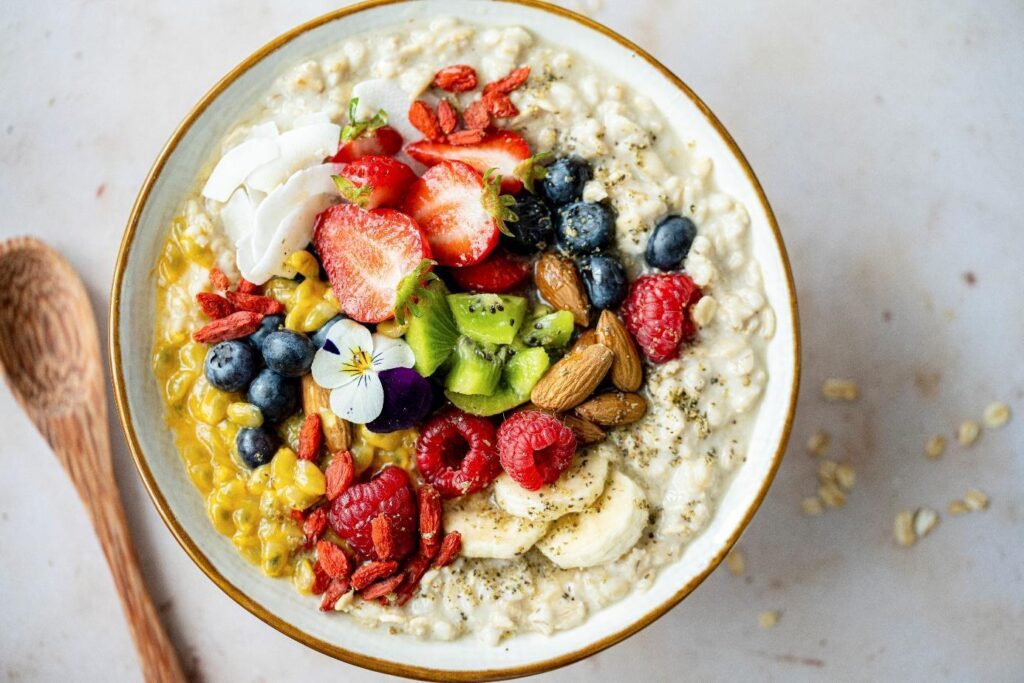
The result looks like something from a brunch café in Bali and delivers roughly 30 grams of protein before you’ve even thought about lunch. The almond butter adds healthy fats that slow digestion, the seeds add micronutrients, and the whole thing takes under five minutes to assemble.
Overnight Oats: The Meal Prep Power Move
If there is a single recipe that has improved more mornings for more people than overnight oats, it doesn’t exist. And the high-protein version is just as easy.
The night before (per serving):
- ½ cup rolled oats
- 1 scoop protein powder (chocolate works beautifully here)
- 1 tablespoon chia seeds
- 1 tablespoon cocoa powder (optional, for a mocha version)
- 200ml milk of your choice
- A small squeeze of honey or maple syrup
Stir everything together in a jar or container, seal it, and refrigerate overnight. By morning the oats have absorbed the liquid, the chia seeds have swelled, and the whole thing has the texture of creamy pudding.
Top with sliced banana, a spoonful of peanut butter, or a handful of granola. It keeps in the fridge for up to three days, which means you can batch-prep three jars on Sunday night and have breakfast sorted for the start of your week.
Pro tip: The chocolate and peanut butter combination tastes so much like a dessert that you’ll find yourself looking forward to waking up. That’s the goal.
Greek Yogurt: The Underrated Kitchen Workhorse
Before you write this one off as obvious, consider how few people actually use Greek yogurt to its full potential. It’s not just a bowl of fruit on the side – it’s a cooking ingredient.
Swap sour cream for Greek yogurt in tacos, baked potatoes, and dips. Use it as the base for marinades (the lactic acid tenderizes meat beautifully). Stir it into mashed potatoes for a tangy, protein-rich upgrade. Freeze it with honey and berries for a simple homemade frozen yogurt.
A full-fat Greek yogurt delivers around 10 grams of protein per 100 grams. Add a serving of granola and some nuts and you’re looking at a snack or light meal that genuinely keeps you going.
The Mindset Shift That Changes Everything
Here’s what all of these recipes have in common: they lead with flavor, not function. The protein is there, often in serious quantities, but it’s never the point. The point is a bowl of food that you’re excited to eat.
That’s the real secret to sustainable high-protein cooking. When you stop treating it as a sacrifice and start treating it as a creative challenge, everything changes. You start seeing ingredients differently. A jar of almond butter isn’t just a snack, it’s a sauce base. A scoop of clean whey protein isn’t a supplement, it’s a cooking ingredient that happens to be nutritious.
Food should make you feel good in every sense of the word: satisfied, energized, and genuinely happy to be eating it. With a little creativity, high-protein cooking does exactly that – no sad chicken breast required.